

How to Predict Silver Prices Using Oil and Bond Analysis


Top Broker of the Month
Open an Exness account and practice trading with a resettable $10,000 demo — zero risk to your own money.
How to predict silver prices using oil and bond analysis is a useful approach when trading XAG/USD. Silver’s trend does not depend on the chart alone; it is also affected by the US dollar, bond yields, and oil prices. In this guide, you will learn how to use intermarket analysis to build a more comprehensive silver trading strategy.
table of contents
What Drives the Price of Silver?
The price of silver is influenced by a combination of economic, investment, and industrial factors, rather than by a single factor. The most important include supply and demand, US dollar strength, bond yields, inflation levels, and industrial activity. Understanding these factors can help you read silver price action more effectively before making any trading decision.
Why Is Silver Both a Precious Metal and an Industrial Commodity?
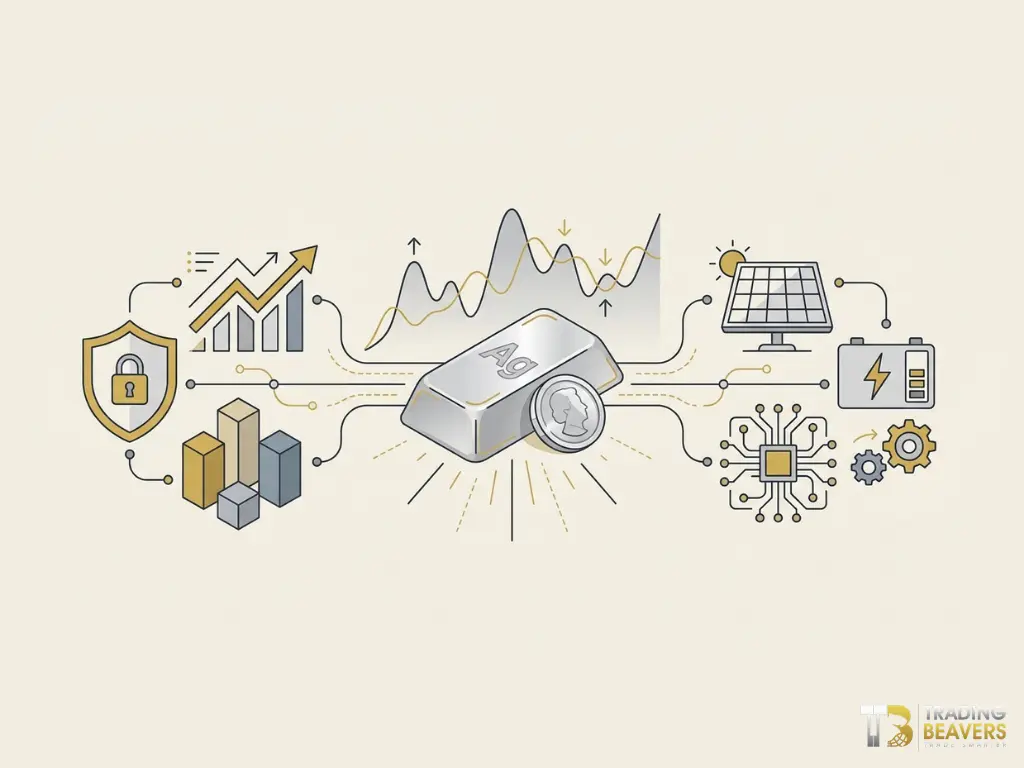
Silver combines the characteristics of a precious metal and an industrial commodity. Demand for it may rise as a safe haven during periods of market anxiety, while it is also used in industries such as solar panels, electric vehicles, and electronics. As a result, the silver price is affected by investment and industrial factors at the same time.
Key Factors That Affect Silver Prices
The silver price is influenced by several interconnected factors, most notably supply and demand, US dollar strength, inflation, and bond yields, as well as industrial demand and global economic activity. Understanding these factors helps you interpret silver price movements more accurately.
- Supply and demand
The price of silver is affected by the amount of metal available from mining and recycling compared with the level of demand from investors and industrial sectors. - US Dollar (DXY)
Silver is priced globally in US dollars, so a stronger DXY Dollar Index may make silver more expensive for buyers using other currencies. For this reason, silver often tends to move inversely to the dollar, although the relationship is not consistent under all conditions. - Inflation and global events
Inflation expectations or economic and political tensions may support demand for precious metals. Conversely, a stronger dollar or higher bond yields can put pressure on the silver price. - Industrial demand
Silver is used across multiple industries, so improving economic activity or declining industrial production may affect demand for it. This dual nature makes the silver market more complex to analyze than relying on a single factor alone.

How Is Silver Traded Through XAG/USD?
You do not need to own physical bars to trade silver; some brokers allow you to trade movements in XAG/USD through CFDs. On platforms such as MT4 and MT5, you can speculate on rising or falling prices, while paying attention to leverage and the risks associated with it.
What Is Intermarket Analysis for Silver Trading?
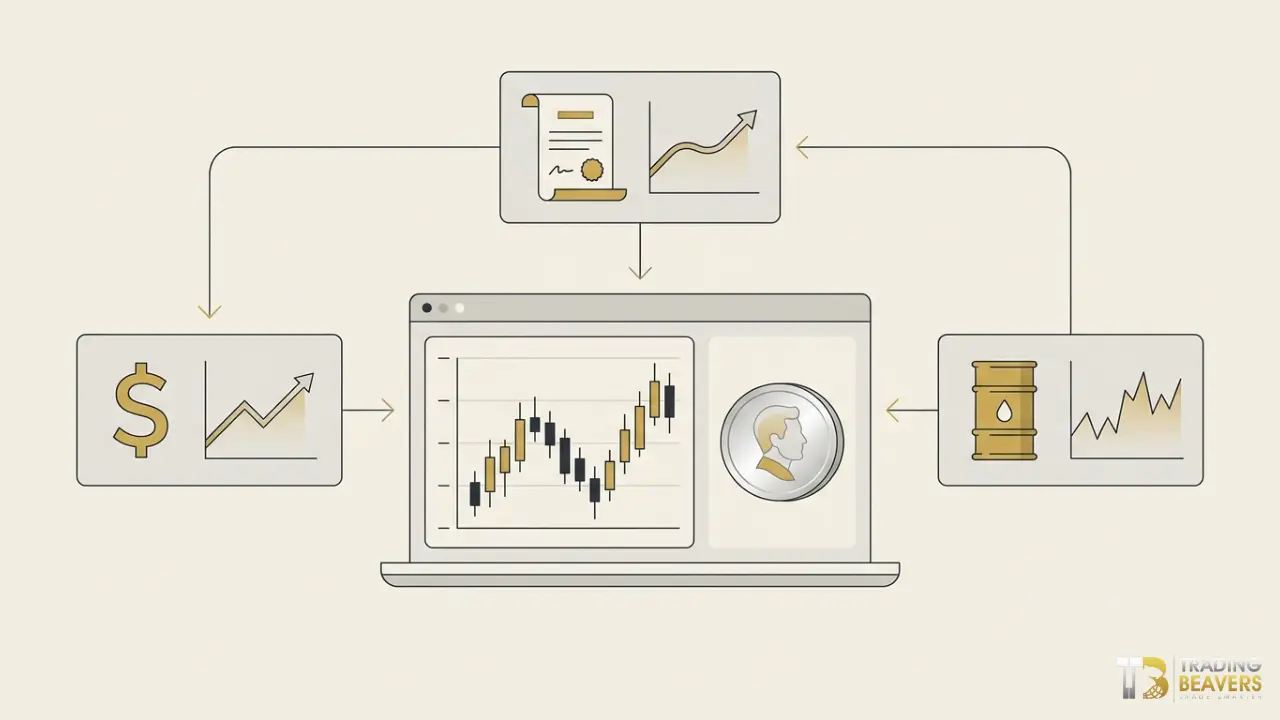
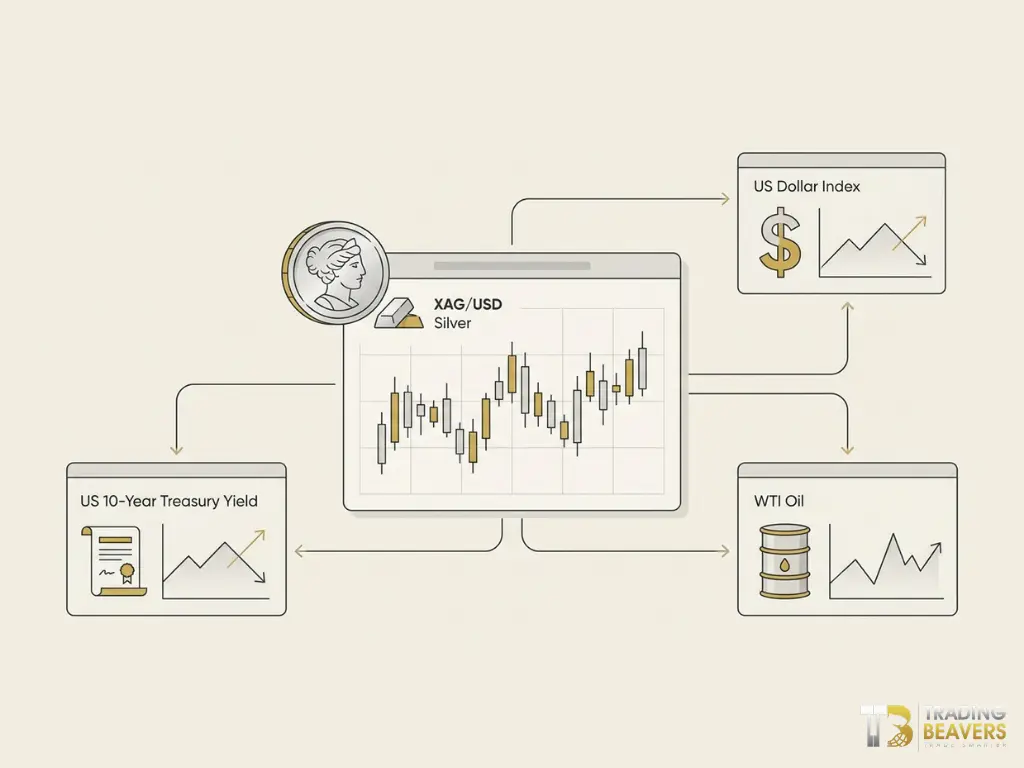
Intermarket analysis is the study of relationships between the commodity, currency, bond, and stock markets to understand the movement of a particular asset. For silver trading, you can monitor the US dollar, bond yields, and oil, then compare these signals with XAG/USD price action.
Why Is Technical Analysis Alone Not Enough to Predict Silver Prices?
Technical analysis helps you identify the trend, support and resistance levels, and potential entry points. However, monitoring markets related to silver adds important context: Do economic conditions support the idea of buying or selling, or do they conflict with it?
Which Markets Should You Monitor for Silver Trading?
- U.S. Dollar Index (DXY): Dollar strength may pressure silver, while dollar weakness may provide support.
- U.S. Treasury yields (US10Y): Higher yields may reduce the appeal of metals that do not generate periodic income.
- Oil (WTI): Oil can reflect inflation expectations or economic activity, both of which may affect silver.
- Silver price (XAG/USD): The silver chart remains the primary tool for confirming the trend, entering trades, and managing the trade.
How Do Bond Yields Affect the Price of Silver?
The relationship between bond yields and silver is not a fixed rule. Silver may sometimes rise despite higher yields because of safe-haven demand or shifts in liquidity. Use yields as a confirming factor, not as an independent trading signal.
What Is the Relationship Between US10Y and Silver Prices?
Silver does not generate periodic income, so it may become relatively less attractive when U.S. Treasury yields rise. As a result, the relationship between US10Y and the silver price may tend to be inverse during some periods, particularly when rising yields coincide with dollar strength.
How to Use Bond Yields to Analyze Silver Prices
Monitor 10-year U.S. Treasury yields, US10Y, alongside the XAG/USD chart. If yields are rising sharply while the dollar is strengthening, this may put pressure on silver. If yields are falling and the dollar is weakening, conditions may become more supportive for silver, provided this is confirmed by price action.
Use yields as a confirming factor, not as an independent trading signal. Do not enter a trade merely because US10Y is rising or falling; wait for the trend to align with technical analysis and risk management.

How Does Oil Analysis Affect Silver Prices?
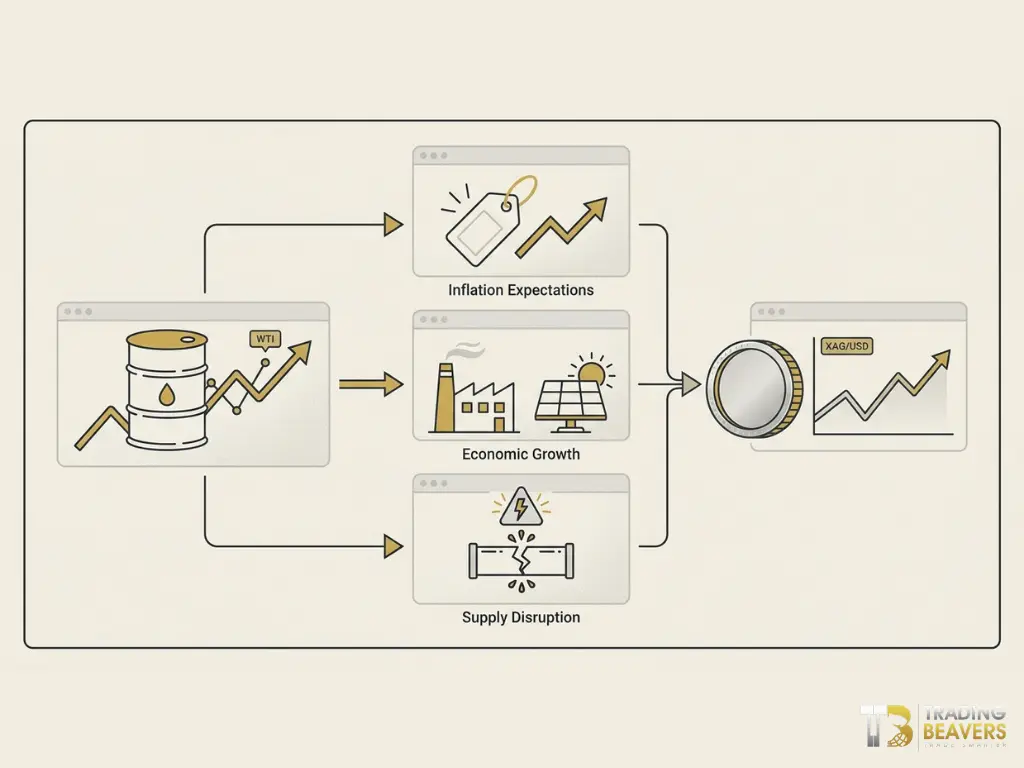
Do not rely on the direction of oil alone to forecast silver price movements. Monitor the reason for the move: Is it inflation, economic growth, or a supply disruption? Use oil as part of intermarket analysis, not as a standalone indicator.
- Oil as an Inflation Indicator
Rising oil prices may increase transportation and production costs, raising inflation expectations under certain conditions. When inflation concerns increase, investors may show greater interest in precious metals such as silver as a potential hedge. - Oil as an Economic Growth Indicator
Higher oil prices may also reflect improving economic activity and energy demand. Because silver is used in multiple industries, economic growth can support industrial demand for it.
Why Does Oil’s Impact on Silver Depend on Its Price Move?
It is not enough to ask: Did oil rise or fall? The more important question is: Why did oil move?
- A rise in oil driven by inflation expectations or stronger economic activity may support silver.
- A decline in oil caused by a clear economic slowdown may pressure industrial demand for silver.
- A rise in oil caused by a supply disruption does not necessarily mean that demand for silver will increase.
Therefore, use oil as part of intermarket analysis, not as a standalone indicator for forecasting the direction of the silver price.

How to Use Intermarket Analysis in a Silver Trading Strategy
You can turn intermarket analysis into a simple checklist before making a decision on XAG/USD. The goal is not to collect as many indicators as possible, but to determine whether the major markets support the same idea or send conflicting signals.
Checklist Before Trading XAG/USD
- What is the direction of the DXY Dollar Index? Dollar strength may pressure silver, while weakness may support it.
- What is the direction of US10Y bond yields? Higher yields may be a source of pressure, while lower yields may provide potential support.
- What is the direction of WTI oil, and what is driving the move? Determine whether the movement is linked to inflation, growth, weak demand, or supply disruptions.
- What does the silver chart indicate? Identify the trend, support and resistance levels, entry point, and stop-loss order.
- Do the signals agree? Agreement among the signals does not guarantee a successful trade, but it may improve the quality of your decision. Conflicting signals make waiting a logical option.
| Scenario | Dollar (DXY) | Bonds (US10Y) | Oil (WTI) | XAG/USD approach |
|---|---|---|---|---|
| Potential support for buying | Bearish | Bearish | Bullish or stable due to growth or inflation | Look for a buying opportunity after clear technical confirmation |
| Potential pressure on silver | Bullish | Bullish | Bearish due to economic weakness | Avoid buying and look for a selling opportunity after clear technical confirmation |
| Conflicting signals | Unclear or changing | Unclear or changing | Unclear | Reduce risk or wait until the picture becomes clearer |
As a practical example, if DXY and US10Y are both declining while oil maintains a bullish trend because of improving growth expectations, the environment may be more supportive for silver. However, do not open a buy trade immediately; wait for technical confirmation on XAG/USD, such as a breakout above significant resistance or a clear bounce from a support zone, then set your stop-loss order before entering.
Risk Management When Predicting Silver Price Moves
Even the strongest signals do not guarantee a successful trade. Determine the position size based on the distance between the entry point and the stop-loss order, not on the expected profit. Reduce risk when signals conflict, and wait until the picture becomes clearer.
Determining Position Size
Even the strongest signals from a silver trading strategy do not guarantee a successful trade. Determine the position size based on the distance between the entry point and the stop-loss order, not on the expected profit or the strength of your conviction about the trade.
Using a Stop-Loss Order
Place the stop-loss order at a level that invalidates the trading idea, not at an arbitrary level. A stop-loss order helps limit the damage if the market moves against your expectation because of an unexpected news event or sharp volatility.
Risk for Small Accounts
As a general educational rule, many traders prefer to keep the risk on a single trade within a small percentage of capital, such as 1% or less, depending on their trading plan and ability to tolerate loss. If the account balance is $500, 1% equals $5 as the planned maximum loss on the trade.
Building a comprehensive silver trading strategy like this one—combining technical analysis, intermarket analysis, and strict risk management—is what separates amateurs from professionals. It may seem complicated at first, and that is normal.

Practical Silver Trading Tips and Risk Management
Some brokers offer Islamic or swap-free accounts. However, review the terms carefully, as some brokers may charge administrative fees or impose restrictions on how long a trade can be held. Sharia compliance also depends on the nature of the contract and the broker’s terms, so consult a qualified Sharia authority when necessary.
Best Times to Trade XAG/USD
Liquidity often increases when the European and U.S. sessions overlap because more market participants are active. However, the exact timing changes with daylight saving time and market schedules, so check your platform’s time or TradingView instead of relying on a fixed hour throughout the year.
Mini Contracts
Mini contracts or small position sizes may help control risk, particularly for small accounts. The key is to ensure that the position size matches the stop-loss order and the risk percentage specified in your plan.
Best Brokers for Trading Silver
When choosing a broker for silver trading, review its licensing and regulation by authorities such as FCA, spreads and commissions, trading platform quality, and order execution speed. Choosing the right broker is no less important than the trading strategy itself.





Conclusion: Using Oil and Bond Analysis to Trade Silver
Silver trading does not take place in a vacuum. Monitoring the US dollar, bond yields, and oil prices alongside the XAG/USD chart gives you broader context for understanding silver price movements.
Use intermarket analysis to confirm a trading idea, not to predict every market movement. Start with a demo account, monitor XAG/USD, DXY, US10Y, and WTI across several sessions, then test the silver trading strategy in a clear trading journal while applying disciplined risk management.
If you want to apply these concepts within a structured educational plan, you can explore the educational resources available at Trading Beavers.
FAQs About Predicting Silver Prices
Can Silver Prices Be Predicted Using Oil and Bond Analysis?
Oil and bond yields can be used as part of intermarket analysis to understand factors that may affect the price of silver, but no indicator guarantees an accurate price forecast.
What Is the Relationship Between U.S. Bond Yields and the Price of Silver?
Higher bond yields may reduce the relative appeal of silver, particularly when they coincide with a stronger dollar, but the relationship is not consistent under all market conditions.
Does Rising Oil Mean Higher Silver Prices?
Not necessarily. The impact of oil depends on the reason for the move; oil may rise because of inflation or economic growth, while it may also move for supply‑related reasons that do not necessarily support silver.
Which Markets Should You Monitor When Trading Silver?
You can monitor DXY, US10Y, and WTI alongside XAG/USD to understand intermarket relationships and confirm trading signals.
Is Intermarket Analysis Alone Enough for Trading Silver?
No. It is better to use intermarket analysis as a confirming factor alongside technical analysis and risk management, rather than relying on it as an independent trading signal.
📌 Disclaimer: This content is for educational and informational purposes only and does not constitute investment advice. Trading involves high risks that may result in the partial or total loss of capital. You should conduct your own research before making any investment decision.