

How to Choose the Best Brokers for Trading Silver


Top Broker of the Month
Open an Exness account and practice trading with a resettable $10,000 demo — zero risk to your own money.
Choosing a reliable silver broker is not just about low commissions or ease of use. It starts with avoiding counterparty risk and ensuring the safety of your funds. In this comprehensive guide, we reveal the key criteria for choosing a broker so you can invest in silver safely without compromising your profits.

In this guide, we help you protect your funds by:
- Checking the licensing and financial regulation of each silver broker.
- Revealing the methods that protect you from the risk of broker bankruptcy.
- Applying the golden rules we recommend at Trading Beavers to protect your capital first.
table of contents
What Are the Risks of Trading Silver With a Broker?
Imagine spending months studying charts and mastering silver trading strategies, only to wake up one day and discover that the greatest threat to your funds was not a losing trade, but the disappearance of the financial broker itself!
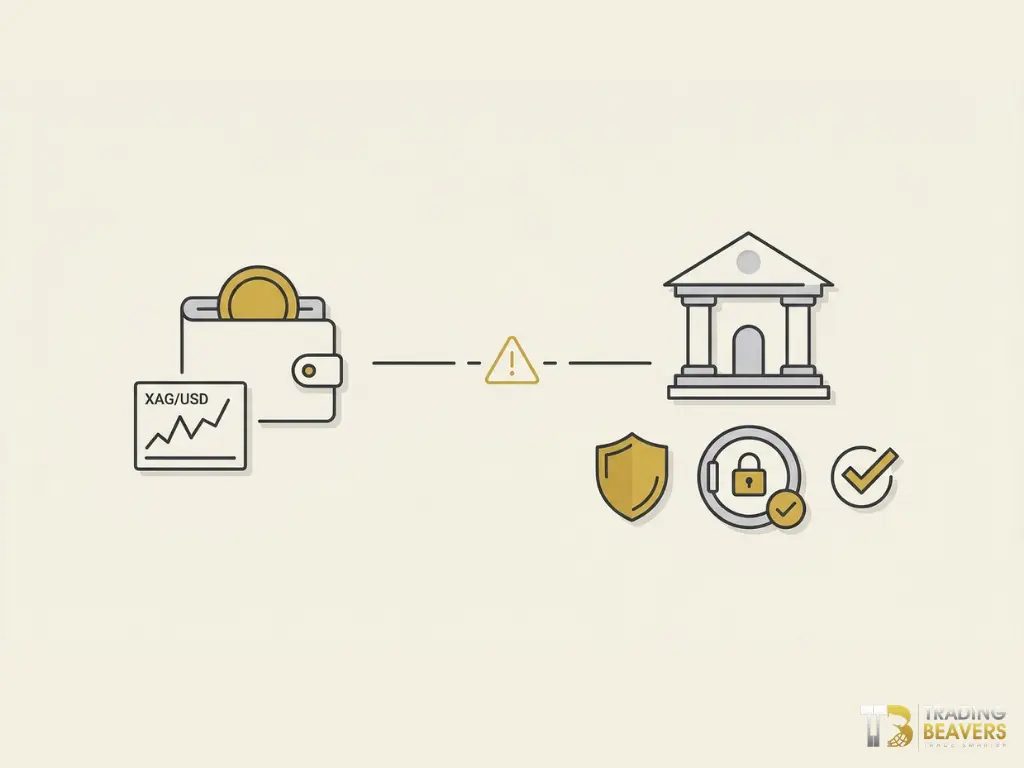
This risk is known as counterparty risk; it is the possibility that a trading platform will become insolvent or suffer financial distress. When a broker fails, all your analysis and successful results may become worthless, and your goal suddenly shifts from generating profits to trying to recover your original capital. For this reason, choosing a reliable broker is the first and most important step before opening any trade in silver trading.
What Is Counterparty Risk in Silver Trading?
Simply put, counterparty risk in silver trading is the possibility that the broker or counterparty will fail to meet its financial obligations to you, whether when executing trades or when you request a withdrawal of your funds and profits.
Imagine giving a friend money to buy a specific device for you, but the friend delays delivering it or encounters a problem that prevents them from fulfilling the obligation—this is roughly what this risk means, except that your financial broker replaces your friend. Therefore, the risks of silver trading are not limited to fluctuations in the metal’s price; they also include the safety of the broker through which you hold your funds.
To understand these risks better, you need to know how the broker executes your trades, because the execution model may affect the nature of the relationship between you and the broker:
| Broker model | Trade execution mechanism | Is there a conflict of interest? |
|---|---|---|
| A-Book (direct pass-through) | Passes clients’ trades to liquidity providers or the market, with revenue typically generated from spreads and commissions. | Usually lower because the broker does not necessarily rely on client losses as a direct source of revenue. |
| B-Book (market maker) | The broker retains part of the risk from clients’ trades internally and may become the direct counterparty to the trade. | May be higher because the broker’s interests may differ from the client’s interests in some cases. |
Why Does Counterparty Risk Matter in Silver Trading?
The main issue is not only the potential existence of a conflict of interest, but also the broker’s financial and regulatory ability to meet its obligations. If the brokerage company becomes insolvent or suffers financial distress, clients may face difficulties recovering their funds, particularly when regulatory protection is limited or there are no clear mechanisms for protecting client money.
This is precisely the scenario every trader should consider before depositing capital with any broker, regardless of how attractive its offers may be.
For this reason, choosing a trusted silver broker should not be based solely on a low spread or leverage. It is also important to verify the regulator overseeing the broker, the mechanism for separating client funds from company funds, and whether any investor compensation schemes or mechanisms for protecting client balances exist, depending on the jurisdiction.
How Can You Reduce Counterparty Risk in Silver Trading?
To reduce this risk, focus on a broker with strong regulation and financial transparency that provides clear information about the safeguarding of client funds and trade execution. You should also avoid transferring large amounts to a broker that is not subject to credible regulatory oversight, even if it offers a low spread or attractive bonuses.
Ultimately, silver trading risk management does not mean monitoring XAG/USD and using a stop-loss only; it also starts with choosing the broker with which you will place your capital. This is a fundamental consideration for any trader who wants to protect their capital over the long term.
How to Identify a Fraudulent Silver Broker: Red Flags to Watch For
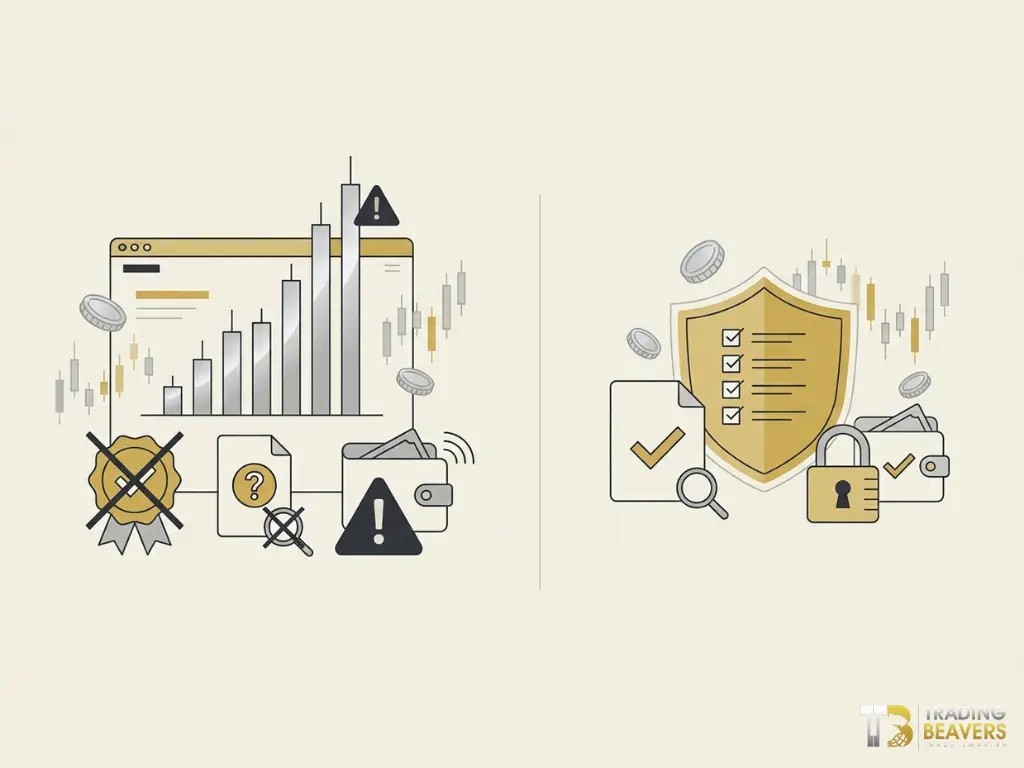
After learning about counterparty risk in silver trading, the question remains: how can you identify a fraudulent trading company before putting your funds at risk? Although fraudsters may present a professional image, clear signs can help you identify an unreliable broker.
Red flag 1: Unrealistic and guaranteed profit promises
“Earn a guaranteed 50% profit every month!” If you hear promises like this, treat them as a clear warning sign. Trading silver and precious metals involves risk, and no reliable broker can guarantee fixed profits or eliminate the possibility of loss.
Even the best traders experience losing trades, so guaranteed profit in trading is merely a way to attract beginners seeking quick wealth. Reliable silver trading companies explain the risks with the same level of attention they give to the opportunities.
Red Flag #2: No Regulation or Unreliable Licensing
One of the most important steps in choosing a reliable broker is checking the regulator overseeing it. If the broker is unregulated or provides unclear information about its license, this is a warning sign that should not be ignored.
It is not enough for a broker to display a license number on its website. You must verify it through the regulator’s official website, because the level of client fund protection varies depending on the regulator and jurisdiction.
Red Flag #3: Problems With Withdrawals
Complications when withdrawing profits from a trading company are among the clearest warning signs. Reliable trading companies clearly explain withdrawal procedures, fees, and the expected processing time.
If you encounter any unreasonable difficulty withdrawing even a small portion of your profits or capital, withdraw all your funds immediately if possible. This is often the final step before the company disappears entirely. For more details about these methods, see our comprehensive guide on how to protect yourself from fraudulent silver trading platforms.

Why Regulation Matters When Choosing a Silver Broker
After identifying the warning signs when choosing a trading company, strong regulation becomes one of the most important factors in assessing the security of a silver broker. Remember, however, that licenses are not equal and that the level of protection varies according to the regulator and the entity with which the client opens an account.
Major Regulators for Silver Brokers
When choosing a silver broker, first check which regulator oversees it and which legal entity you will deal with. Major regulators worldwide include FCA in the United Kingdom, ASIC in Australia, CySEC in Cyprus, and DFSA in Dubai. A license from a recognized regulator may mean that the broker is subject to requirements relating to client funds, risk management, and regulatory reporting.
What Are Segregated Client Accounts?
Segregated Accounts mean that client funds are separated from company funds in accordance with applicable regulatory rules. This mechanism is considered one of the tools for protecting client funds, particularly if the brokerage company suffers financial distress or exits the market. FCA rules state that separating client funds from company funds is an important protection mechanism if the company fails.
| Status | Strongly regulated broker | Unregulated broker |
|---|---|---|
| Client fund protection | Specific regulatory requirements and mechanisms apply, depending on the regulator. | Protection may be limited or unclear. |
| Separation of client funds | May be mandatory under the applicable rules. | Comparable regulatory guarantees are not necessarily available. |
| Protection in case of financial distress | Procedures or compensation schemes may be available depending on the jurisdiction. | Depends more heavily on the company’s legal status and local procedures. |
Therefore, when looking for a regulated silver broker, do not ask only whether the company is licensed. Check the regulator, the entity with which you will contract, and how client funds are protected. These steps give you a stronger basis for assessing the company’s risks before depositing your capital. The same criteria apply if you are looking for a reliable gold trading company.
How to choose a reliable silver broker
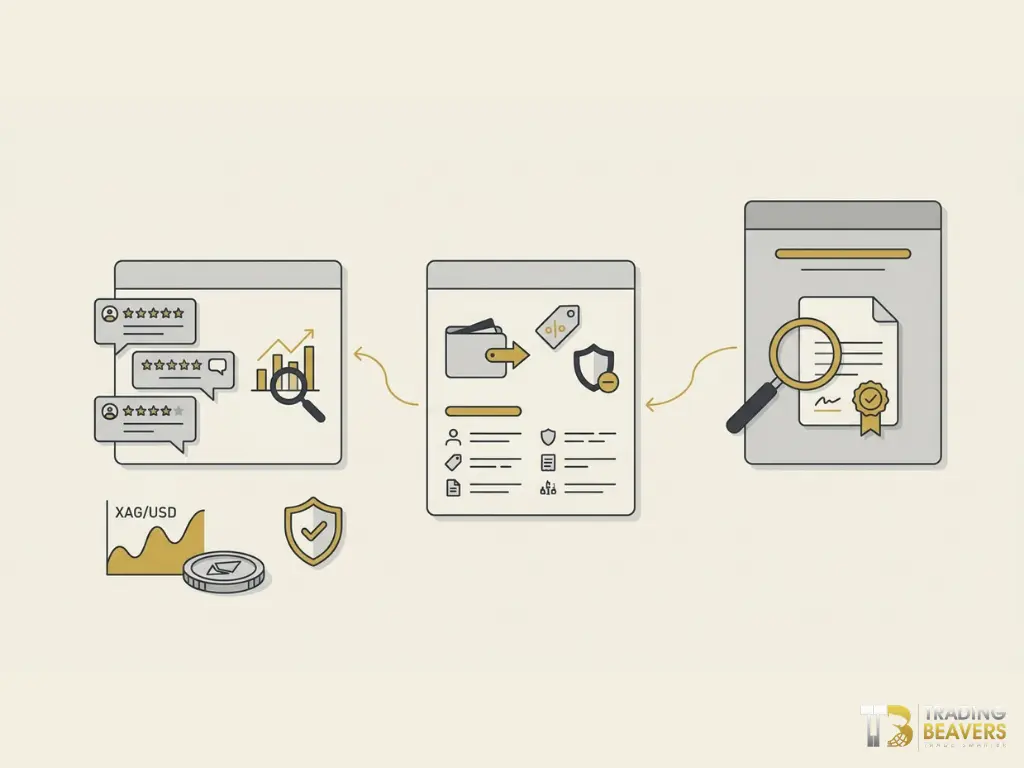
After learning about broker risks and warning signs, it is time to put this knowledge into practice. When looking for a reliable silver broker, focus on three essential steps that can help you assess the broker before depositing your funds.
Step 1: Verify the license yourself
If the broker says it is licensed by a strong regulator such as FCA or ASIC, do not rely on this claim alone. Visit the regulator’s official website and search for the company’s name and the legal entity with which you will trade.
Displaying the regulator’s logo on the broker’s website is not enough. The important thing is to find the license details in the official register and confirm that they are valid and match the company with which you will open an account. Failure to find the license or finding inconsistent information is a clear warning sign.
Step 2: Review Trading and Withdrawal Terms
You do not need to read every term in detail, but it is important to look for clauses that could directly affect your funds. Use Ctrl+F or Command+F and search for terms such as:
- Withdrawal
- Deposit
- Inactivity Fee
- Negative Balance Protection
Negative balance protection is particularly important when trading silver with leverage, but its availability and terms vary according to the broker, regulator, and account type.
Step 3: Check the Broker’s Reputation
After verifying the license and terms, look for traders’ experiences with the broker from independent sources. Focus on recurring complaints related to withdrawals, customer service, trade execution, or account closures.
Do not judge a broker based on a single negative review; what matters is the presence of a recurring pattern of similar complaints across more than one source.
Following these three steps gives you a stronger basis when choosing the right broker for trading silver and helps you assess the broker’s safety before putting your capital at risk.
Best Brokers for Trading Silver
When choosing the best brokers for trading silver, focus on companies that combine licensing from a recognized regulator with competitive trading costs, spreads and commissions—and provide tools and account types suited to your needs, such as Islamic accounts without swap fees.





Key Security Factors When Choosing a Silver Broker
Verifying the license and segregated client accounts is an essential step, but other factors can also help you assess the security of a silver broker before depositing your funds.
Investor compensation schemes
If a regulated broker suffers financial distress or becomes insolvent, some regulators may provide investor compensation schemes subject to specific conditions and limits. Examples include FSCS in the United Kingdom and ICF in Cyprus.
The existence of this protection does not mean that recovering your funds is guaranteed in every case. You should therefore understand the compensation conditions, maximum coverage, and regulatory entity with which your account is held.
Broker Reputation and Track Record
A broker’s history in the market is an additional factor when choosing a silver broker. A company with many years of activity and a clear track record may provide more information to help you assess its stability, but the company’s age alone should not be treated as sufficient evidence of reliability.
Islamic trading accounts
If you are looking for silver trading in accordance with Islamic principles, verify that an Islamic account is available and review its actual terms. Some brokers offer accounts without swap fees, but fee details and conditions vary from one company to another, so it is important to read them before opening an account.
Ultimately, do not choose a silver trading broker based only on the spread or leverage. Consider the strength of regulation, client fund protection, compensation schemes, the broker’s reputation, and the account terms before making your decision.
FAQs About Choosing a Silver Broker
Which broker is best for trading silver?
There is no single answer that suits everyone. The most suitable choice depends on the strength of the company’s regulatory license, trading costs—including spreads and commissions—and the type of account you need, including whether Islamic accounts are available. It is best to compare several options based on these criteria before making a decision.
What is the difference between an A-Book and B-Book broker in silver trading?
An A-Book broker passes your trades directly to liquidity providers in the market and earns revenue from commissions and spreads. A B-Book broker may retain part of the risk from your trades internally and become their direct counterparty, which may create a potential conflict of interest.
How Can I Verify a Silver Broker’s License?
Do not rely only on the regulator’s logo on the broker’s website. Go directly to the regulator’s official website, such as FCA or ASIC, and search for the company’s name and legal entity to confirm that the license is valid and matches the broker.
What happens to my funds if a silver broker becomes insolvent?
It depends on the strength of the company’s regulation. Strictly regulated brokers are generally required to separate client funds from company funds in segregated accounts, and investor compensation schemes may be available depending on the regulator. With an unregulated broker, however, the chances of recovering your funds may be very limited.
Is negative balance protection important when trading silver?
Yes, particularly when using leverage because of fluctuations in silver prices. This feature ensures that you cannot lose more money than you deposited in your account, but its availability and terms vary according to the broker, regulator, and account type.
Conclusion: How to Choose the Best Silver Broker
Counterparty risk is an important part of silver trading risk. It can be reduced by choosing a strongly regulated broker and verifying its license and client fund protection before making a deposit.
Remember that responsibility for verifying the broker starts with you. With so many trading companies available, comparing different options and terms can be difficult. Trading Beavers reviews and broker guides can therefore help you understand the key security factors and costs before choosing the right silver broker for your trading needs.
📌 Disclaimer: This content is for educational and informational purposes only and does not constitute investment advice. Trading involves high risks that may result in the partial or total loss of capital. You should conduct your own research before making any investment decision.