

Silver Trading Psychology: Control Fear & Greed


Top Broker of the Month
Open an Exness account and practice trading with a resettable $10,000 demo — zero risk to your own money.
Overcoming fear and greed in silver trading starts with an emotion-free trading plan. From there, apply strict risk management rules and build a solid understanding of trading psychology.
Silver is often called the poor man’s gold. The reason is simple: its price is far more affordable than gold. That makes silver investment an attractive option for a broad range of investors. But this nickname does not tell the whole story — silver also has a highly volatile and aggressive side.
In this guide, we explain why silver prices move so sharply. We also break down how emotions and psychological biases affect traders’ decisions. We then cover practical trading strategies to help you handle the silver market more systematically.
We also cover capital management, entry and exit points, slippage, and fees. Just as important: reviewing every trade after you close it.
Table of Contents
Why is Silver Trading So Volatile?
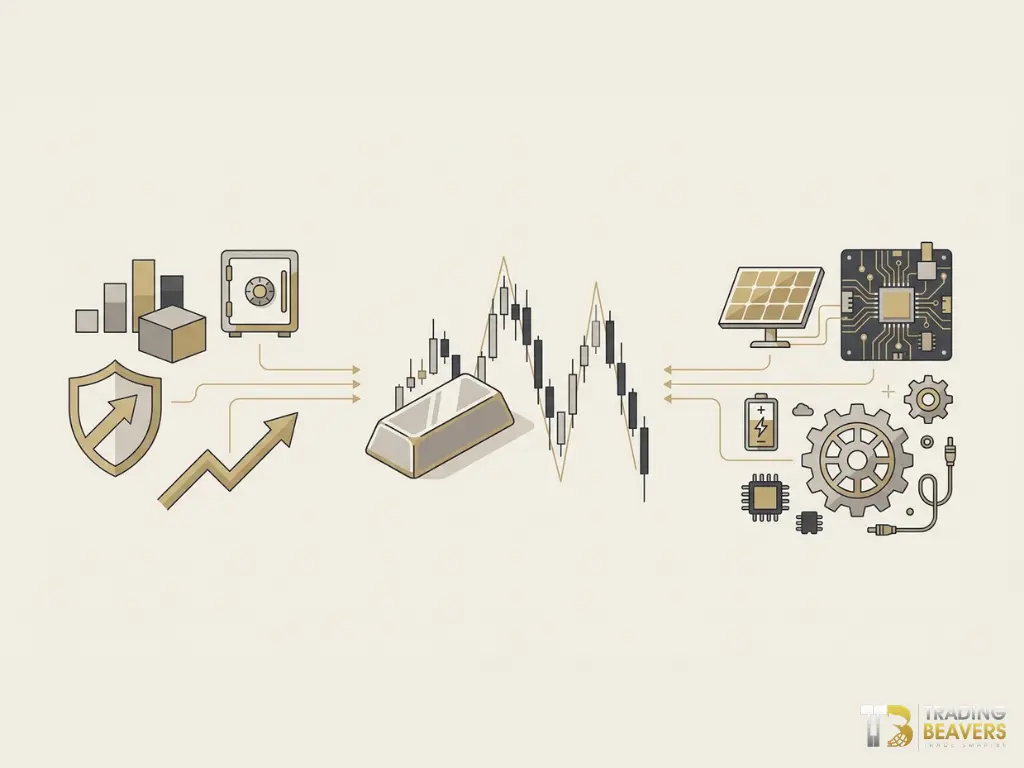
Silver prices move sharply for three main reasons. The first is its dual nature as both an investment and an industrial metal. The second is the small market size compared with gold. The third is rapid speculation driven by emotion and collective impulsiveness.
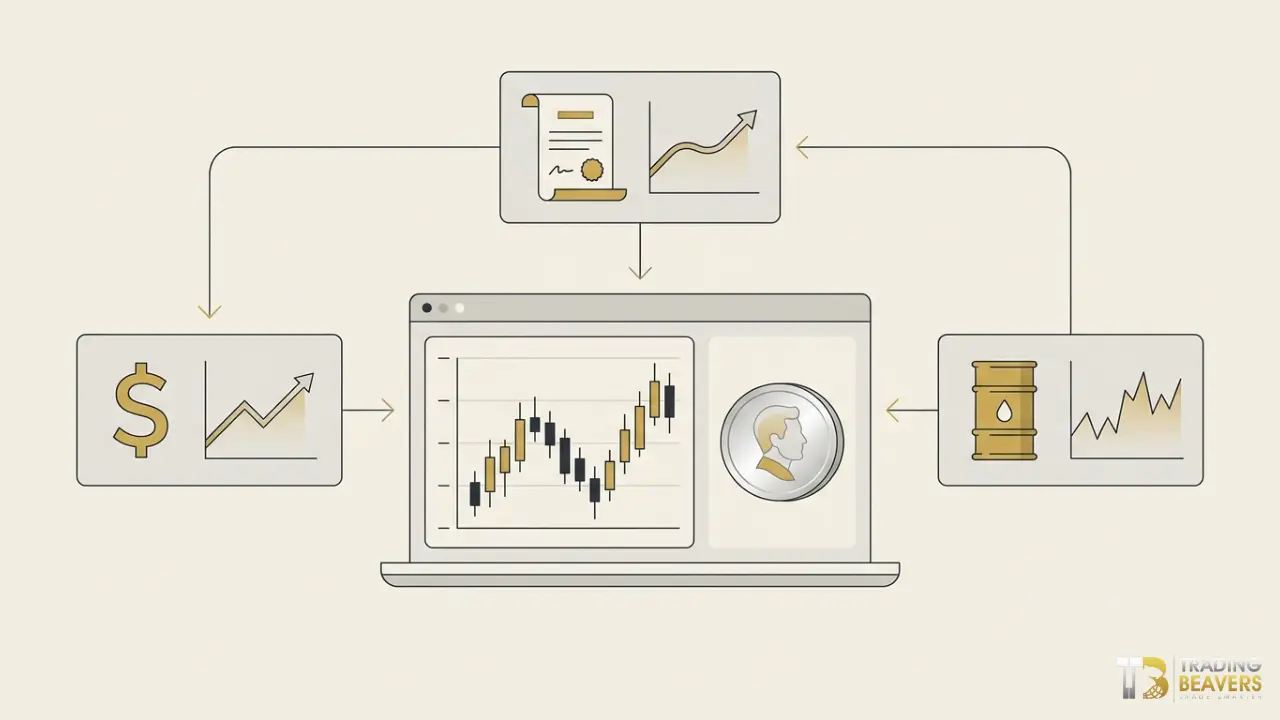
To understand silver price volatility, start with silver’s dual nature. Investors hold it as a precious metal, while industry uses it in countless applications.
- Silver as an investment asset
Like gold, investors may view silver as an asset that can be used to diversify portfolios or hedge under certain market conditions. As a result, demand for it may be affected by economic expectations, interest rates, the dollar, and levels of uncertainty in financial markets. - Silver as an industrial metal
Silver is used in multiple industries and applications, from electronics to solar energy and others. Therefore, the state of the global economy and industrial activity can have a significant effect on demand for silver.
Silver’s Market Size and Liquidity
Alongside its dual nature, there’s a second reason silver swings so sharply: the small size of the silver market. Its lower liquidity compared with gold amplifies every price move.
To simplify the idea: imagine that the gold market is like a vast ocean, while the silver market is like a large swimming pool. Throwing a large rock into the ocean will have little noticeable effect, but the same rock in the pool will create powerful waves that may cause the water to overflow.
That is exactly what happens in silver trading. Limited liquidity and a small market size mean relatively large buy or sell trades can move the silver price sharply within a short time.
Herd Speculation and Silver Volatility
Silver speculation and momentum driven by social media rumors are among the biggest volatility drivers. When retail traders and major speculators rush to buy collectively, price bubbles form and artificially inflate silver volatility. Once the enthusiasm fades, the price collapses suddenly. This is one of the most common traps for beginners in silver trading. This is where trading psychology becomes essential for avoiding herd behavior and controlling your decisions.
Summary of the causes of silver volatility: Prices swing sharply because of silver’s dual nature—as an industrial metal and safe-haven asset—its smaller market size compared with gold, and rapid speculation.
Fear and Greed: The Psychological Traps in Silver Trading
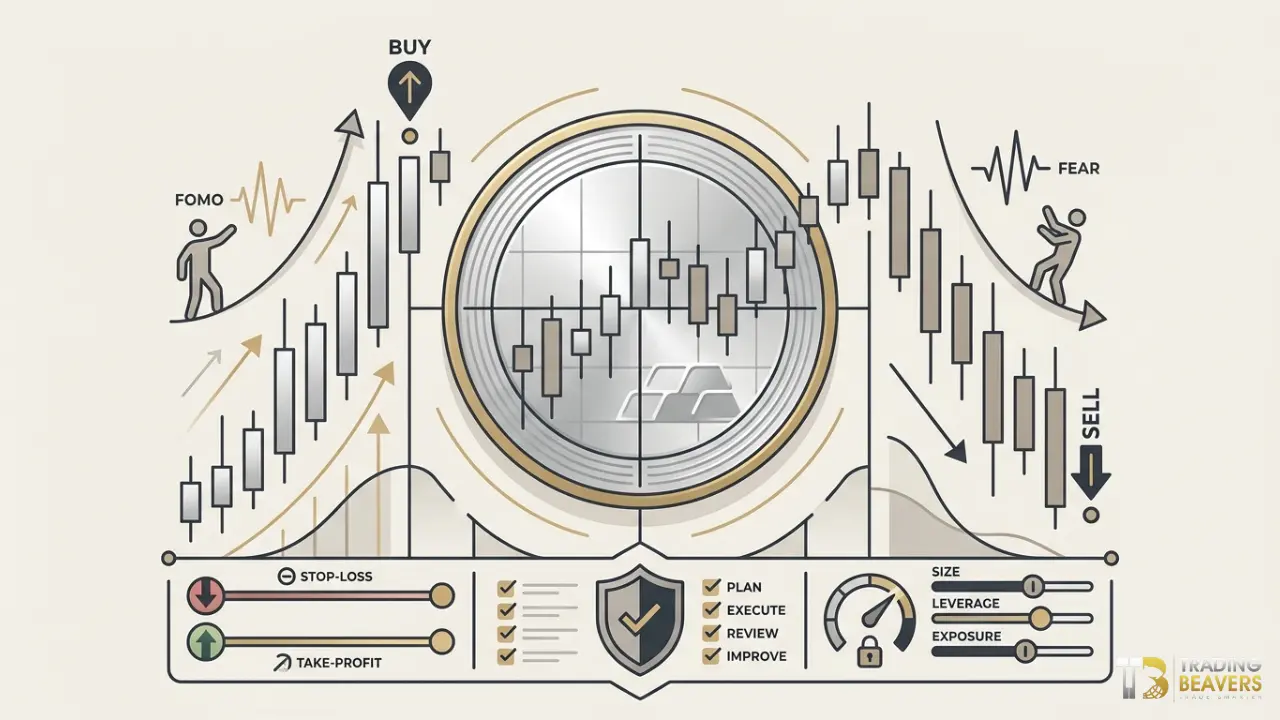
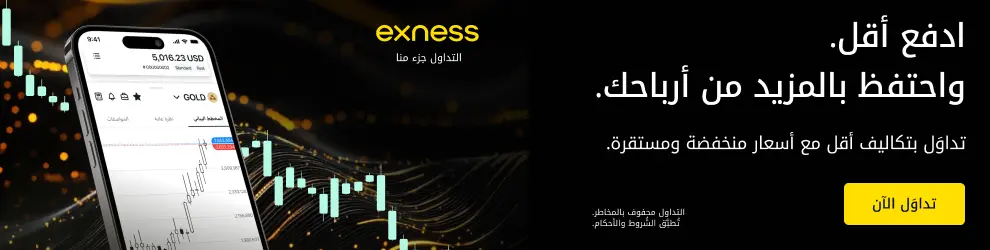
The most common psychological traps in silver trading are: fear of missing out (FOMO), which drives you to buy at the top; anchoring bias, which prevents you from accepting a small loss; confirmation bias, which blinds you to warnings; and revenge trading after a stop-loss order is triggered.
Knowing the causes of market volatility alone is not enough to protect your capital; the real enemy in silver trading is not the chart but impulsive, emotional decisions. Your emotions turn silver volatility from profit opportunities into a series of losses. To overcome this challenge, here are the most common psychological traps and how to avoid them:
The FOMO trap: buying at the top and selling at the bottom
This cycle begins when you see the silver price rising sharply. Fear of missing out (FOMO) takes control, and you impulsively buy near the top. When the trend reverses and the price falls, panic takes over and you sell at the bottom to lock in the loss.
Buying at the top of greed and selling at the bottom of fear is the exact formula that turns a manageable loss into an account-destroying one.
Common Cognitive Biases in Silver Trading
Emotional decisions in silver trading arise from programmed cognitive errors in thinking known as cognitive biases. The most prominent include:
- Anchoring bias: Holding on to the entry price and refusing to exit with a small loss in the hope that the price will return, turning a minor loss into a financial disaster.
- Confirmation bias: Ignoring warnings and negative analyses while searching exclusively for opinions that support your losing trade and justify your emotional decision.
Revenge Trading: How One Loss Destroys Your Whole Account
After a stop-loss order is triggered, anger drives you into revenge trading: entering a new trade immediately with a larger position size and without analysis, simply to recover the money. This emotional impulse turns silver investment from a structured activity into high-risk gambling.
At Trading Beavers, we place trading psychology and risk management ahead of technical analysis because following a predefined plan is your real protection for making calm, disciplined decisions.
Best Silver Trading Brokers (XAG/USD)
If you are looking for a company to trade silver with, it is important to compare spreads, execution speed, platforms, available tools, and trading conditions, because the costs and conditions for trading XAG/USD may vary from one company to another. Options that traders can compare include:





Building a Silver Trading Plan That Beats Panic
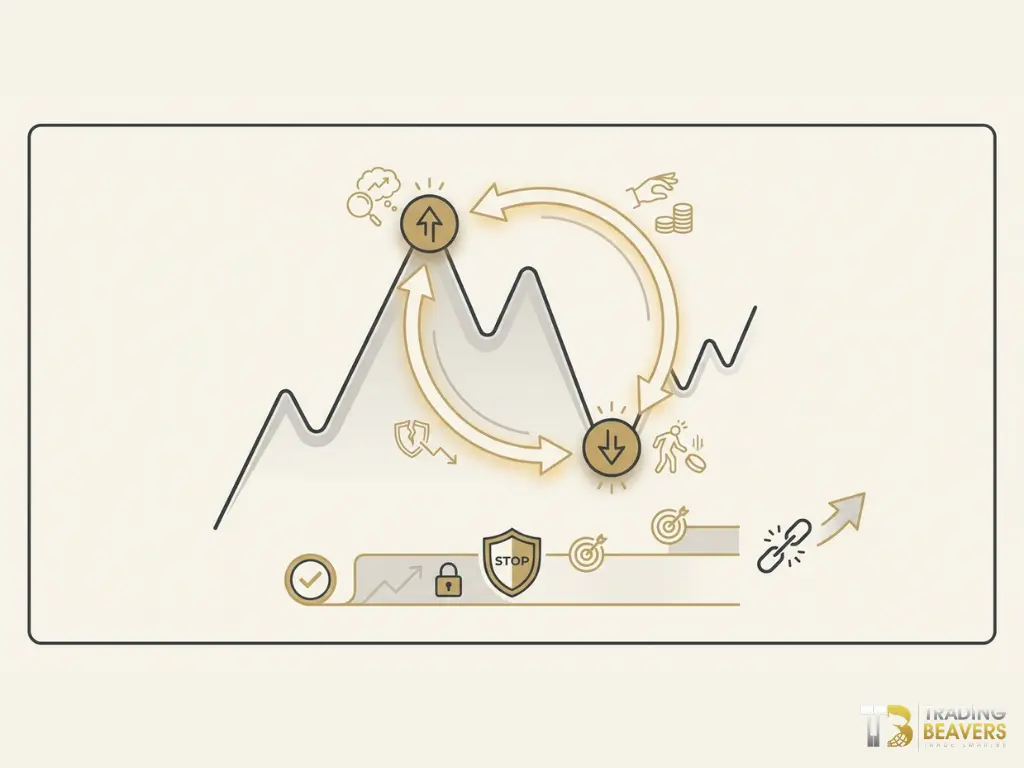
To address negative emotions in silver trading, the solution is not to search for a magic indicator but to follow a written trading plan. Trading without a plan is like entering a battle blindfolded, while a strict plan is the real difference between amateurs and professionals.
To turn fear into confidence, follow these three pillars when building your plan:
The 1% Risk Management Rule
The most important risk management rule is not to risk more than 1% to 2% of your total capital on a single trade.
Practical example: If your account contains $500, risking 2% means risking only $10. Knowing that your maximum loss is a small amount eliminates panic and gives you the ability to withstand losing trades and learn from them without destroying the account.
Setting Stop-Loss and Take-Profit Levels
A serious beginner mistake is delaying your exit points until the price moves against you. Before opening any trade, you must determine two crucial levels:
- Stop-loss: the point at which you acknowledge that your analysis was wrong. Place it to protect your capital, and never move it if conditions deteriorate. (Professional tip: use the ATR indicator to measure the average movement of silver and place the stop-loss outside the range of these random fluctuations.)
- Take-profit: your target point for exiting with a profit; it secures your gains and prevents greed from destroying the trade.
Best Time to Trade Silver
Silver markets (XAG/USD) are not ideal for trading all day. The best and safest time is the period when the London and New York sessions overlap.
Why? During this period, liquidity reaches its highest levels, making price action smoother and protecting you from sudden spikes and the slippage that occurs during quiet periods.

Trade Management: Staying Calm Mid-Trade
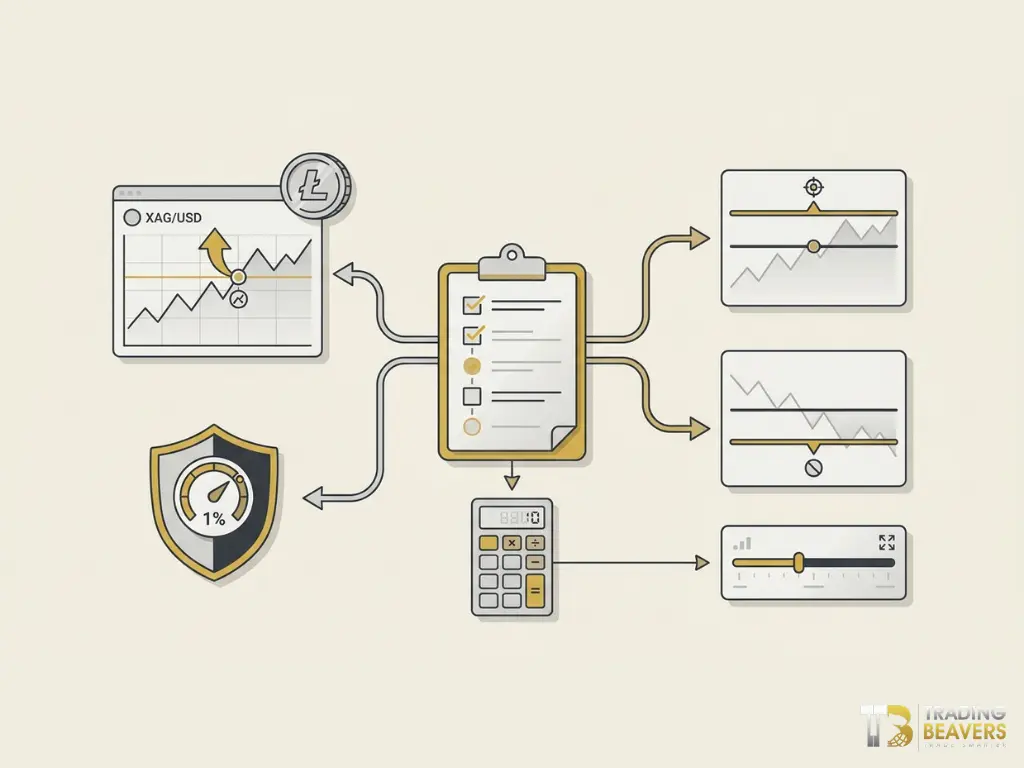
After opening your trade and defining the risk, the real emotional battle begins. Here are three practical tactics to manage stress and act calmly during silver price fluctuations:
- Set and Execute: Once you place your stop-loss and take-profit, your role as an analyst is over. Close the platform and step away from the screen. Constantly watching the chart creates unnecessary stress. This anxiety can push you to close the trade early or move your stop-loss emotionally.
- Scaling Out: When the price reaches halfway to your target, close half of your position. Then, move the stop-loss on the rest to your entry point. This tactic secures actual profits and makes the trade completely risk-free. It removes psychological pressure and gives you the confidence to let profits run.
- Rely on Price Alerts: Stop staring at the chart and chasing every candle. Instead, set price alerts on platforms like TradingView or MT4/MT5 for key levels. Return to the screen only when an alert sounds.
Reviewing Your Trades: Turning Losses into Lessons
Closing a trade is not the end; it is the beginning of learning. In silver trading, real growth occurs after the battle ends, when every trade—profitable or losing—becomes a practical lesson in understanding trading psychology. Calmly reviewing your decisions is what separates professionals from amateurs.
To get the most from your previous trades, follow these steps:
- Trading journal: Do not merely record the numbers; write down your emotions. Before the trade, ask yourself: Am I entering based on strong technical analysis or out of greed?. After closing: Did I follow my plan, or did panic take control?. These answers clearly reveal your weaknesses.
- Calm market review: The best time for analyzing silver is the weekend. Away from the pressure of open positions in the market, you can view the chart clearly and identify opportunities you missed because of fear and exit signals you ignored because of greed.
- Identifying psychological triggers: As you continue journaling, you will notice recurring patterns that damage your account, such as revenge trading after a loss, closing profitable trades too early, or panic-selling during news events. Recognizing these triggers is your first step toward building trading strategies to counter them.
FAQs: Fear and Greed in Silver Trading
Is silver trading profitable?
It can be profitable for some traders, but it is not guaranteed. The outcome depends on the strategy, risk management, discipline, trading costs, and market conditions.
What is the most important indicator for silver trading?
There is no single indicator that is best for everyone. RSI, moving averages, ATR, and others can be used, but an indicator’s value depends on the strategy and how it is combined with risk management.
What is the difference between investing in silver and trading silver?
Investing is generally associated with a longer time horizon, while trading focuses on benefiting from price movements over shorter periods. Each has different objectives and risks.
Is silver more volatile than gold?
Silver may be more volatile under certain conditions because of its investment and industrial roles and its relatively smaller market, but this varies depending on the period and market conditions.
Conclusion
Volatility in the silver price is not a flaw that must be eliminated, nor a guaranteed profit opportunity to be chased. It is simply a market characteristic around which you should build your strategy and risk management.
- Understand the market: Know the impact of investment and industrial demand and economic factors.
- Control your behavior: Set rules that prevent FOMO and revenge trading from controlling your decisions.
- Define risk before entering: Know the acceptable loss, position size, and stop-loss level.
- Calculate execution costs: Include the spread, commissions, slippage, and potential financing costs when evaluating the strategy.
- Review every trade: Evaluate adherence to the plan, not just the trade’s outcome.
The goal is not to predict every market move. The goal is to know in advance what you will do if silver moves in your favor and what you will do if it moves against you. When the plan comes before emotion, volatility becomes something you can manage rather than a reason to act impulsively.
Sources
Silver Institute — Silver supply and demand data | Silver Institute — Industrial uses of silver | CME Group — Trading hours and specifications for metals contracts
📌 Disclaimer: This content is for educational and informational purposes only and does not constitute investment advice. Trading involves high risks that may result in the partial or total loss of capital. You should conduct your own research before making any investment decision.